Last Thursday (February 12, 2026) marked the beginning of in person early voting in North Carolina. So, where do we stand and what should we watch?
Monday, February 16, 2026
NC's Partisan Stability vs. Independent Uncertainty
By Michael Bitzer
One of the interesting things I found in the generic ballot questions in last month’s Catawba-YouGov Survey was a consistency of voter intentions across the five contests asked (U.S. Senate, U.S. House, N.C. Supreme Court, N.C. State House, and N.C. State Senate).
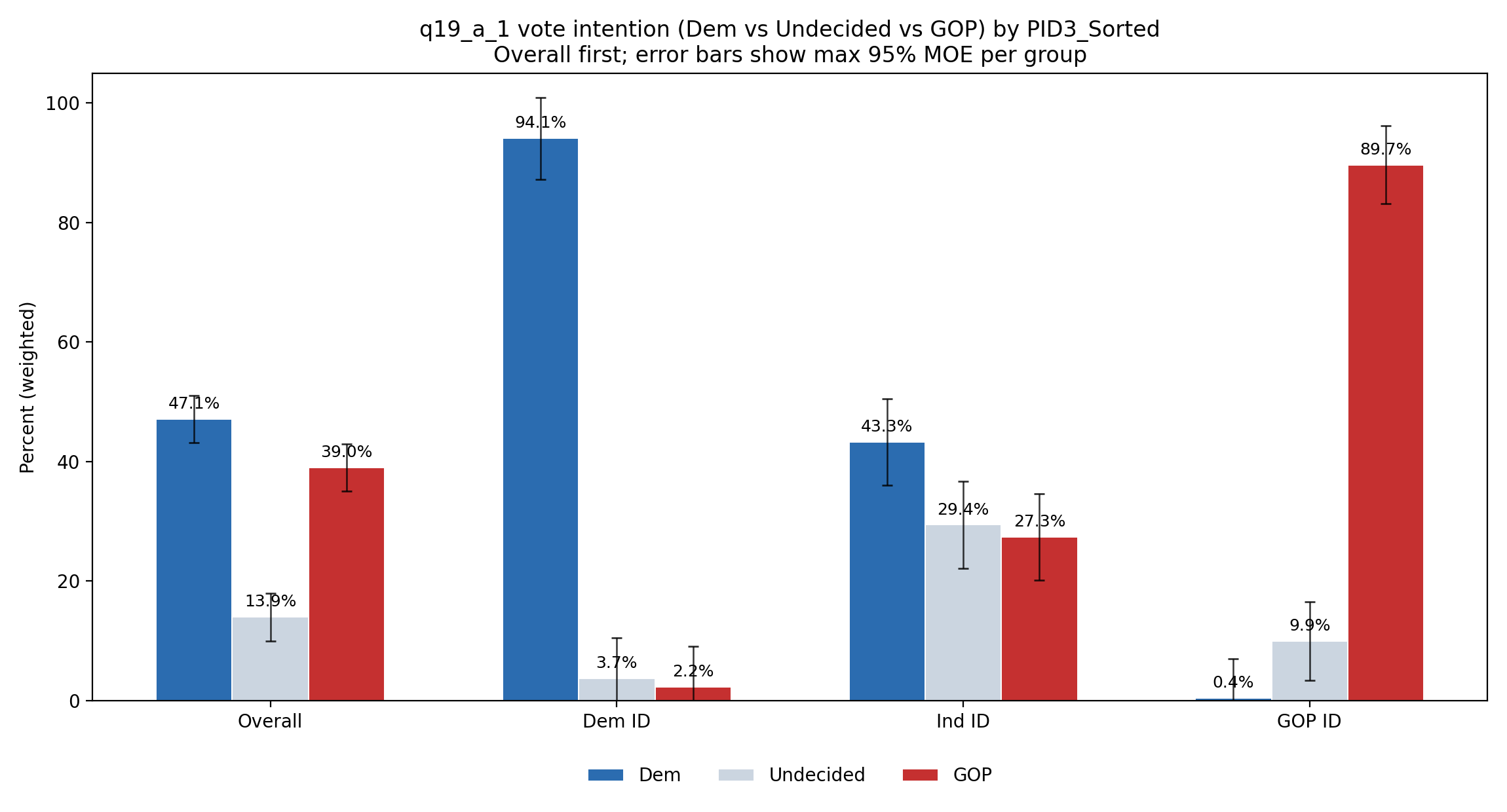
As noted in the release, Democratic candidates generally received about 45 percent of the vote to Republicans receiving 38 percent, with less than 15 percent undecided.
But when looking at the partisan identification, we see some distinctiveness when it comes to voter intention. Take for example the U.S. Senate generic ballot contest (broken into “definitely/likely voting for Democratic candidate vs. undecided vs. definitely/likely voting for Republican candidate”1): we see clear partisan loyalty among those who self-identify as Democratic and Republican, while those who said they were ‘independent’ are more divided, but lean towards one party.

Subscribe to:
Posts (Atom)